
Below is a technical breakdown of how this technology works..
Power System, Battery Architecture & Advanced Charging
Mobile autonomous charging units (MACUs) represent one of the fastest-growing innovations in EV infrastructure across North America. These systems use high-density lithium battery modules—often 50 kWh to 300 kWh—designed with LFP or NMC cells for long cycle life and superior thermal stability. With pack voltages ranging from 400V to 800V, they are compatible with virtually all modern EV platforms. A key advantage is their integrated DC fast-charging output, which typically delivers 20 kW to 120 kW using CCS1, CCS2, CHAdeMO, or GB/T connectors. High-voltage DC-DC converters regulate and stabilize charging, enabling MACUs to provide reliable fast charging even in locations without permanent electrical infrastructure. This makes them ideal for supporting urban EV growth where grid capacity is limited or delayed.
Autonomous Navigation, Robotics & Safety Systems
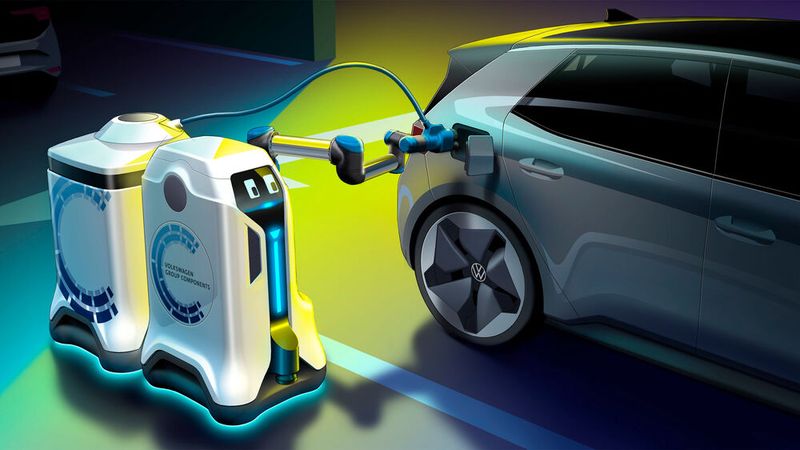
What sets next-generation mobile chargers apart is their autonomous navigation technology. Many units use LiDAR-based SLAM mapping, AI-driven path-planning algorithms, ultrasonic sensors, and onboard cameras to travel through parking lots, airports, commercial centers, and underground garages. They can locate vehicles, avoid pedestrians, and position themselves efficiently. Advanced robotic arms then automatically identify an EV’s charge port, adjust angle and height, and connect using precision force-feedback sensors—eliminating the need for human handling. These systems are supported by robust safety technologies, including sophisticated BMS controls, liquid-cooling thermal systems, real-time SoC monitoring, and multiple layers of electrical protection. Some models even support bidirectional charging, microgrid integration, and peak-shaving energy programs for commercial clients.
Connectivity, Fleet Management & North American Use Cases
MACUs are fully IoT-enabled, featuring 4G/5G connectivity, remote diagnostics, OTA updates, and GPS fleet tracking. Operators can dispatch chargers, monitor usage, assign tasks based on real-time vehicle state of charge, and optimize energy distribution during peak demand hours. These mobile charging systems are rapidly expanding across North America due to their flexibility and zero-infrastructure requirements. They are ideal for filling urban charging gaps, supporting EV fleets (delivery vans, rideshare vehicles, municipal fleets), powering temporary events, and offering emergency roadside charging. As cities struggle to keep pace with EV demand, mobile autonomous chargers provide a scalable, cost-efficient solution that accelerates EV adoption without the delays or costs of permanent infrastructure upgrades.